
Walt asked me the question at the kitchen counter, holding a tub in each hand. He is 64, retired, and he lifts with me on Mondays. One label said creatine monohydrate. The other said creatine HCl. "Aren't these the same thing?" he said. No, they are not, and the difference is not small. I have been mixing Optimum Nutrition creatine monohydrate into a shaker bottle after my Monday, Wednesday and Friday sessions at the rec center, so I will admit my bias right at the start. But I read labels out loud at that counter, and I am not going to pay more for a shorter word on the front of a tub.
Here is the short answer I gave him. For most people, plain creatine monohydrate is the sensible choice. It is the form used in the large majority of published creatine research, one scoop is the entire dose, and it is unflavored, so it goes into whatever you already drink after a workout. Creatine HCl is sold on a promise of dissolving better and sitting easier in your stomach. It may suit you if you travel with a gym bag and dislike shaker bottles. That is the honest trade: one is studied, the other is convenient. Decide which one you actually need before you spend anything.
| Optimum Nutrition Creatine Monohydrate | Creatine HCl | |
|---|---|---|
| What is in the tub | Creatine monohydrate, unflavored, one ingredient | Creatine bonded to hydrochloric acid, commonly sold as capsules |
| Research behind the form | The form used in the large majority of published creatine studies | Far fewer published studies on the HCl form |
| Daily dose | One 5 gram scoop, no conversion math | Smaller servings, so matching 5 grams often means several capsules |
| Servings per container | 120 servings in the 1.32 lb bottle | Usually fewer servings per tub than a bulk monohydrate container |
| Mixing | Stirred or shaken into water or a shake, unflavored | Marketed as dissolving more readily in less water |
| Travel and portioning | Needs a scoop and a shaker bottle | Capsules go in a bag with no shaker at all |
| Who it suits | Lifters who want the studied form and a dose they never have to think about | People who want a capsule and no powder in their kitchen |
How I Compared Them
I should be straight about my method, because I am not a researcher. I am a retired middle-school PE teacher. I walk about three miles most mornings with a group, I lift at the rec center on Monday, Wednesday and Friday, and I teach two low-impact strength classes on Tuesday and Thursday. What I did was read the two labels out loud at my counter, write the serving sizes on the back of an envelope, and then carry both tubs to my pharmacist and ask her to explain the difference in plain words.
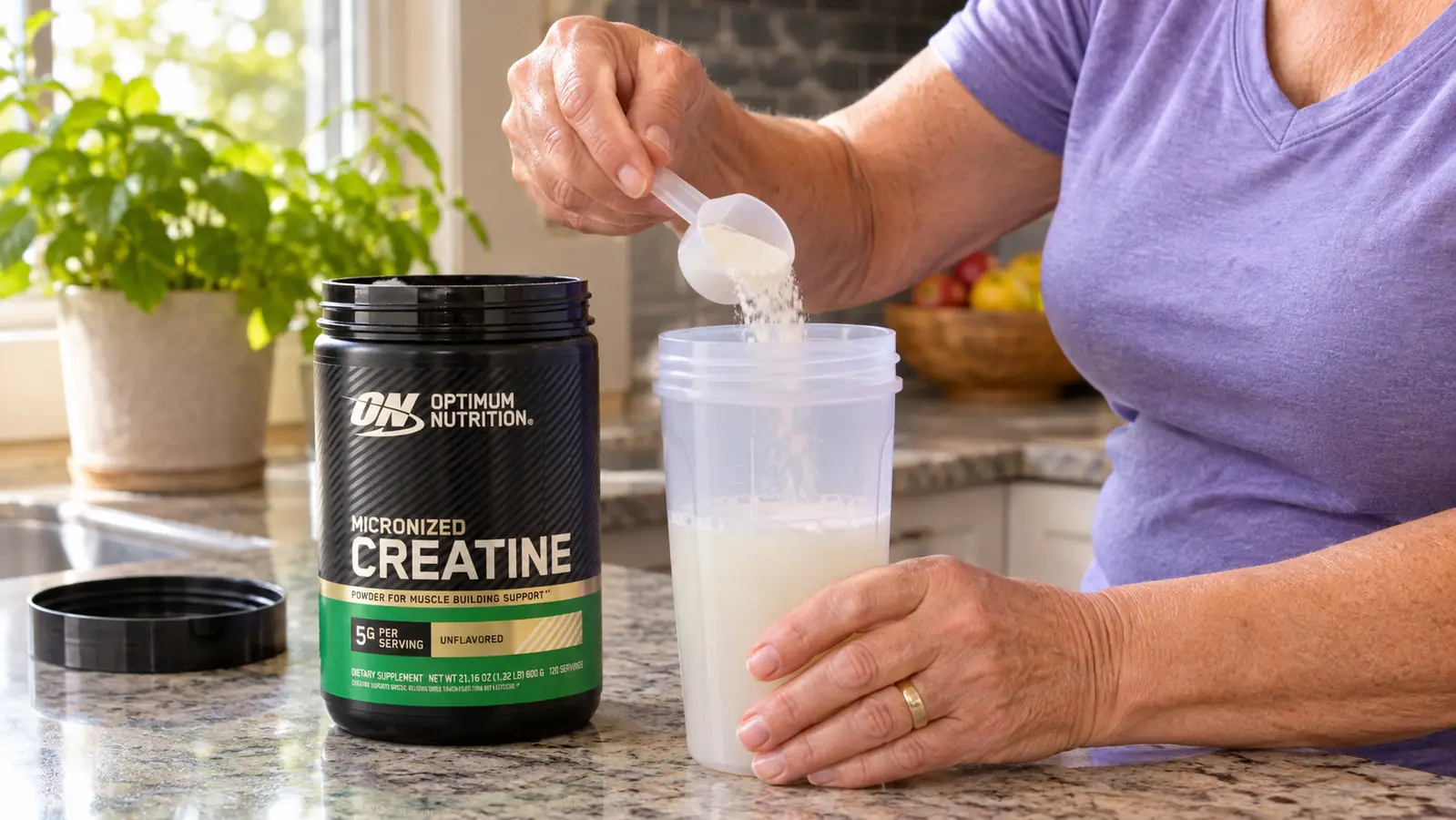
The monohydrate label was easy. One scoop, 5 grams, 120 servings in a 1.32 pound bottle, unflavored, single ingredient. Nothing to decode. The HCl label took longer. It listed a smaller amount per serving and leaned on solubility claims. The pharmacist's summary, in her words and not mine, was that the HCl version is creatine with a different molecule attached, sold on a promise of mixing better, and that the research on it is much thinner than the research on monohydrate.
I wrote the numbers on the back of an envelope and I still have it in the drawer beside the stove. One column said 5 grams, 120 servings, 1.32 pounds. The other listed a serving in capsules, and I had to sit there and work out what three of them added up to. That envelope is the reason I stopped comparing labels by how modern they looked and started comparing them by what they added up to.
That matches what I found when I looked up what the studies actually cover. The big body of work, the trials that get cited over and over, uses creatine monohydrate. I am not going to pretend I read all of it. I read summaries, I asked questions, and I wrote down the answers. That is what a careful 61 year old does before she spends her money. And I would tell you to do the same, including a word with your own doctor or pharmacist, especially if you take any medications at all.
Where Optimum Nutrition Creatine Monohydrate Wins
The first win is the boring one, and it is the one that matters. Monohydrate is the form the research was done on. When a study says creatine supported strength or power or training volume, it almost always means monohydrate. Optimum Nutrition sells exactly that: 5 grams of creatine monohydrate per scoop, unflavored, nothing else in the tub. When I am standing in my kitchen at six in the morning, I do not want to translate a marketing claim into a dose. I want the form the studies used, in the amount the studies used.
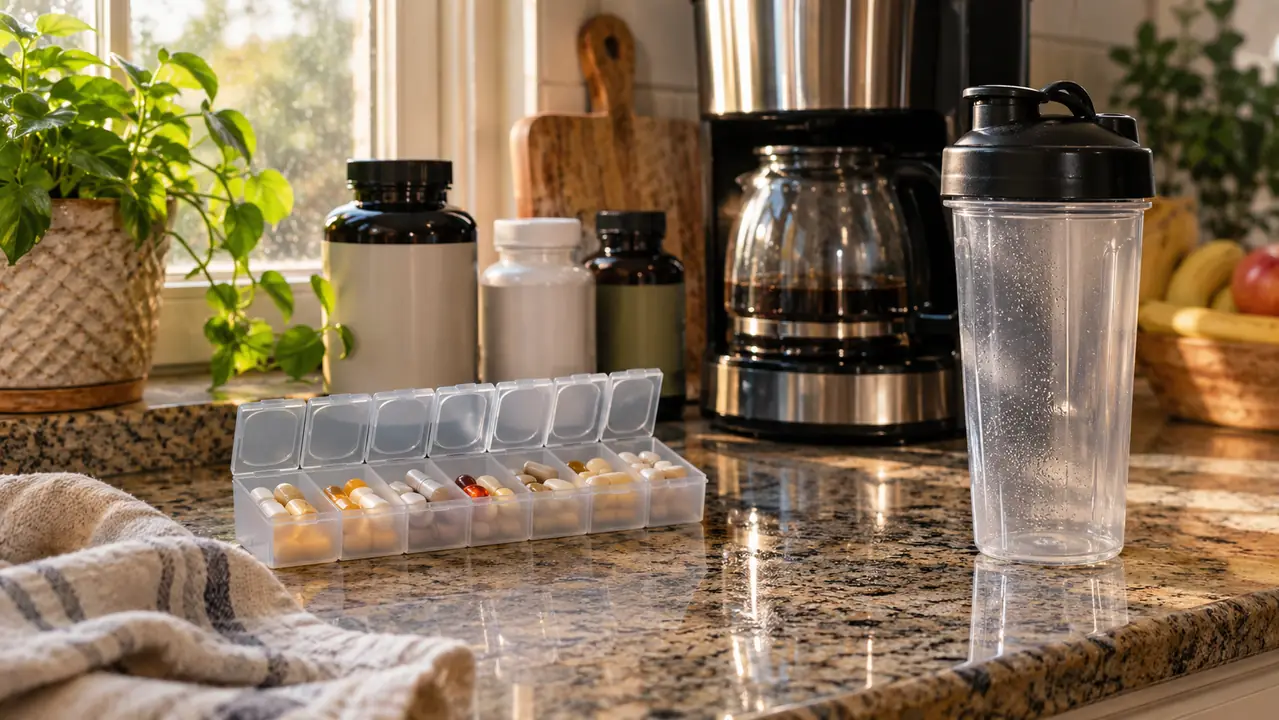
The second win is arithmetic. One scoop is 5 grams. There is no conversion, no counting, no reading the back of a capsule bottle to work out whether three pills or five pills gets me where I am going. My tray sits on the counter next to the coffee maker, the scoop lives in the tub, and the whole job takes about four seconds. For a woman who already keeps a pill organizer and a walking schedule, that simplicity is not a small thing. It is the reason I actually keep doing it.
Here is what that looks like on a real morning. Monday, the alarm goes off at six, I am at the rec center by seven, and I am back at my counter by eight fifteen with the shaker bottle already rinsed. The tub is behind the coffee maker, the scoop is inside it, and I am finished before the coffee is. There is no second step and nothing to count. On the mornings I taught class instead of lifting, I still take it, because the habit belongs to the counter and not to the workout.
The third win is servings. The 1.32 pound bottle lists 120 servings. I do not need to be clever about that number. It means one tub lasts me a long while at one scoop a day, and I am not running out mid-week and skipping sessions because I forgot to reorder. The container is a bottle with a lid, it sits on a shelf, and it does not require me to own anything else.
One more thing, and then I will stop. The listing for this tub talks about quality control, and I care about that more now than I did at 40. I am not a chemist and I cannot verify a manufacturing process from my kitchen. What I can do is buy from a brand that has been around long enough to have a reputation to lose, and read the label to confirm there is nothing in the tub but creatine monohydrate. That is the limit of what I can check. The rest is trust, and I would rather place it with a company that has been selling the same plain powder for decades than with a label invented two years ago.
One scoop is the whole dose. No conversion, no counting capsules, no arithmetic at six in the morning.
Where Creatine HCl Wins
I will give HCl its due, because it does have real advantages and I am not going to pretend otherwise. The main selling point is solubility. HCl is marketed as dissolving more readily in less water, and for anyone who has choked down gritty powder in a shaker bottle that never fully mixed, that promise lands. If you have ever taken a drink and gotten a mouthful of chalk, you know exactly why someone would pay more to avoid it.
The second advantage is the capsule. HCl is commonly sold in capsule form, and capsules travel better than a tub and a scoop. If you spend weekends at a grandchild's ball tournament or you keep a bag in the car, dropping a capsule bottle in with your keys is simpler than measuring powder into a container and hoping it does not open in your bag. Walt pointed that out before I did.
The third point is gentler on the stomach, or at least that is the report. Some people say monohydrate powder leaves them feeling bloated, and they say HCl does not. I have not had that trouble, so I cannot speak to it from experience. If you have, it is worth a conversation with your doctor or pharmacist rather than a guess. And I would say the same about any supplement you are adding on top of a medication.
The Tub That Needs No Translation
One scoop, five grams, unflavored, 120 servings. If you want the form the research was done on and a dose you never have to think about, the Optimum Nutrition tub is the one sitting on my counter.
Amazon Check Today's Price on Amazon →
The Questions I Get Asked at the Rec Center
The first question is always about timing. People want to know whether they have to take it right after a workout or whether the whole thing is ruined. What I tell them is that consistency matters more than the clock, and that I mix mine after I lift because that is when I am already standing at the counter with a shaker bottle in my hand. That is a habit answer, not a science answer. For the science answer, ask your doctor or a registered dietitian, not a retired PE teacher.
The second question is whether they need to load. I never did. I take one scoop, I take it most days, and I do not do anything dramatic in the first week. If you have read that you must take a large amount several times a day for a week, that is a real protocol some people use, and it is also a good question for your pharmacist, particularly if there is any kidney trouble in your family history.
One of my Tuesday regulars, a woman about my age who had a hip replaced two winters ago, asked me to write the dose on an index card so she could tape it inside her cabinet door. That is the level of detail most of us actually need. Not a protocol. A number, and a place to keep it.
The third question is the one Walt asked, and it is the one I hear most: is the expensive one better? My answer is that better depends on what you are buying it for. If you want the form with the research behind it and a simple dose, you want monohydrate. If you want a capsule you can throw in a gym bag and you have had trouble with powder, HCl is a reasonable thing to discuss with your doctor. What I would not do is pay more because the letters look more scientific.
Who Should Buy Which
Buy the Optimum Nutrition creatine monohydrate if you are like most of the people in my Tuesday class. You lift two or three times a week, you want something with a long research record, you do not mind a scoop in a shaker bottle, and you want a dose you can remember without a note card. It is unflavored, so it goes into water or a shake without turning your morning into a flavor experiment, and 120 servings means one tub covers a long stretch.
Buy the HCl if you have genuinely had trouble with powder, either because it upset your stomach or because you could not get it to mix, and if a capsule fits your life better than a tub. It costs more and it has less research behind it, and you should hear both of those things plainly before you decide. If you travel, if you keep a bag in the car, if you simply will not carry a shaker bottle, that convenience is worth something real. Just do not let anyone tell you it is the only form that works.
If you want one more test before you commit, do what I did: take the label to your pharmacist, ask what the serving size actually delivers, and see whether the answer is easy to say out loud. If it takes three sentences to explain a dose, that tells you which tub belongs in your kitchen.
Walt ended up with his own answer. He takes capsules on the days he works at the church pantry and cannot get to a shaker bottle, and he takes a scoop from my tub on lifting days. That is not a recommendation, it is just what two retired people do when they cannot agree. If you are choosing one, choose the one you will actually take on a Tuesday in February when you do not feel like it.
Start With the One the Studies Used
If you are going to take one supplement for strength, make it the plain one. Five grams, unflavored, one scoop. Ask your doctor first, then keep the Optimum Nutrition tub next to the coffee maker where you will actually see it.
Amazon Check Today's Price on Amazon →