

The walk was three miles. I had done it a hundred times. So when I came back on a warm June morning and had to sit on the porch steps before I could get my key in the door, I did not blame the heat. I blamed my knee. My knee turned out to be fine. I was running on empty and had been for the last mile without noticing.
Here is what I have sorted out since then, mostly by getting it wrong in front of my walking group. Staying hydrated on a long walk is not about carrying a bigger bottle. It is about replacing what leaves your body in sweat, and most of that is salt. Plain water dilutes. It does not replace. That is the reason a small stickpack of Ultima Replenisher now rides in the front pocket of my walking vest, next to a folded tissue and a bag of treats for other people's dogs.
What Goes in the Vest Pocket Before the Walk
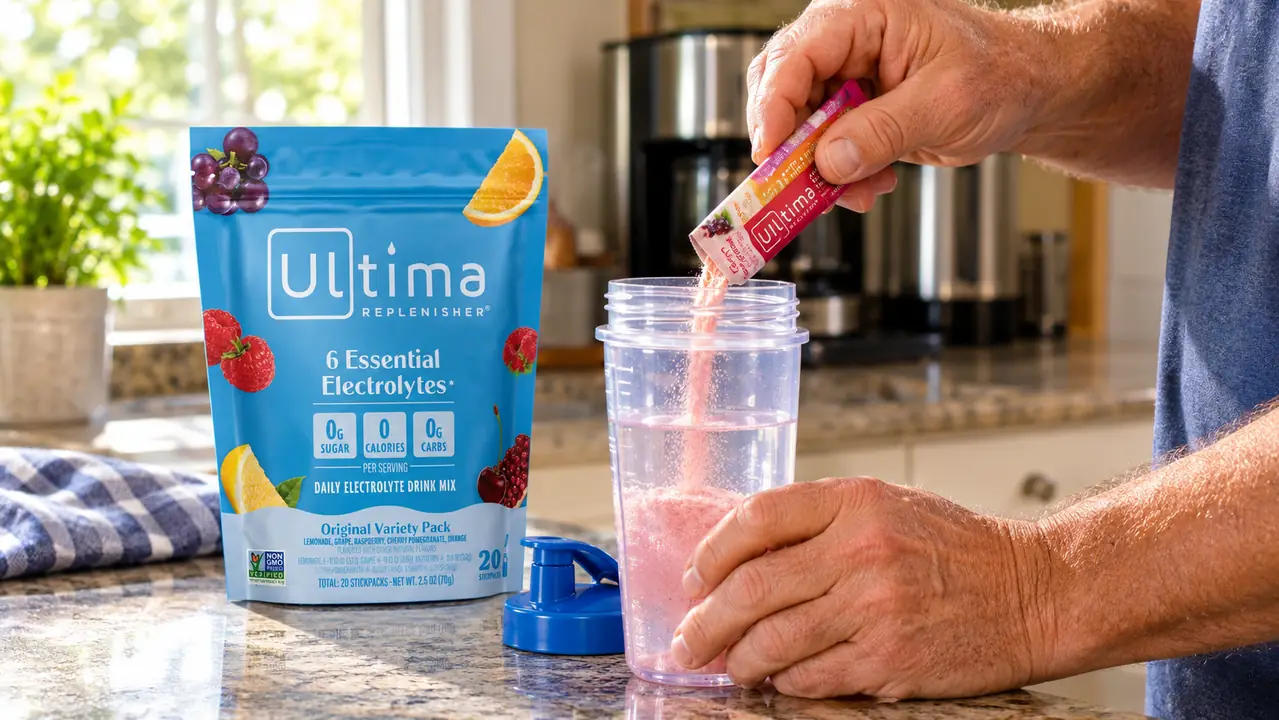
The 20-serving variety bag carries four stickpacks of each flavor, which is enough to cover a couple of weeks of morning walks before you have to think about restocking. Six key electrolytes, zero sugar, sweetened with stevia leaf, gluten free and non-GMO.
Amazon Check Today's Price on Amazon →Step 1: Find Out How Much You Actually Sweat
Most walkers guess. Guessing is how you end up under-drinking on the one day it actually matters. There is a plain way to find out, and it costs nothing. Weigh yourself on the rec center scale before you leave, dry, in the same clothes. Walk. Come back and weigh again before you drink anything. Whatever you lost in pounds is fluid. A pound is roughly sixteen ounces. Add back whatever you drank on the route and you have your number.
The first time I did the weigh-in I got it wrong. I stepped off the scale and drank half a bottle before I remembered to weigh myself, so my number came out short and I spent a month packing for the wrong weather. Do it in the right order: dry, same clothes, before you drink. I keep a pencil on the scale shelf at the rec center now and write both numbers on a scrap of paper before I walk out. It sounds fussy. It takes ninety seconds and it ended the guessing.
Two things move that number more than fitness does: heat and humidity. My three miles in late October and my three miles in July are not the same job. Same trail, same shoes, same pace, and the summer version can cost me twice the sweat. The foothills hold moisture in the air, and on a sticky morning sweat does not evaporate the way it does in dry heat, so you keep producing it and it keeps running down your back instead of cooling you.
You do not need a spreadsheet for this. I did mine three times in one summer and wrote the results on the back of an old class roster, and I have not retested since. Once you know that a summer morning costs you around two bottles of sweat and a fall morning costs you one, you can pack for the weather instead of packing for your hopes.
Step 2: Read the Label Out Loud Before You Buy
I read labels out loud. My husband Walt says I sound like a woman doing a radio ad, and he is not wrong, but reading it aloud is how I catch the things I would skim past. So read the sodium and potassium numbers out loud. Read what is sweetening it. Read the serving size, because a bag of powder is not a serving of powder. If the packet has sugar in it, that is not automatically bad on a long hard day, but it changes how you count it.
The packets I keep now list six key electrolytes, with sodium, potassium, calcium, magnesium and phosphorus among them. The label says zero sugar, and the sweetener is stevia leaf rather than something I cannot pronounce. It is marked gluten free, non-GMO, and it fits a keto diet plan, which matters to two women in my Tuesday class more than it matters to me. It comes as a powder in stickpacks, twenty to the bag, four of each flavor, which is the reason it lives in a vest pocket instead of a kitchen cabinet.
Two bags sat on my counter that first summer and only one earned a second one. The first listed sugar near the top of the ingredients and tasted like a sports drink out of a vending machine, and I drank about half of it before I stopped reaching for it. The Ultima Replenisher packets got finished, then rebought. That is the whole of my testing method, and it has never failed me: what gets used gets bought again, and what sits in the cabinet does not.
One hard rule I hold to, and I hold it for everyone in my class: check any new supplement with your doctor or your pharmacist before you make it a habit. That goes double if you take blood pressure medication, a diuretic, or anything for your kidneys. Some of those interact with sodium and potassium in ways none of us should be guessing about. I am a retired PE teacher, not a clinician, and the label on the box cannot read your chart.
Step 3: Mix It So You Will Actually Drink It
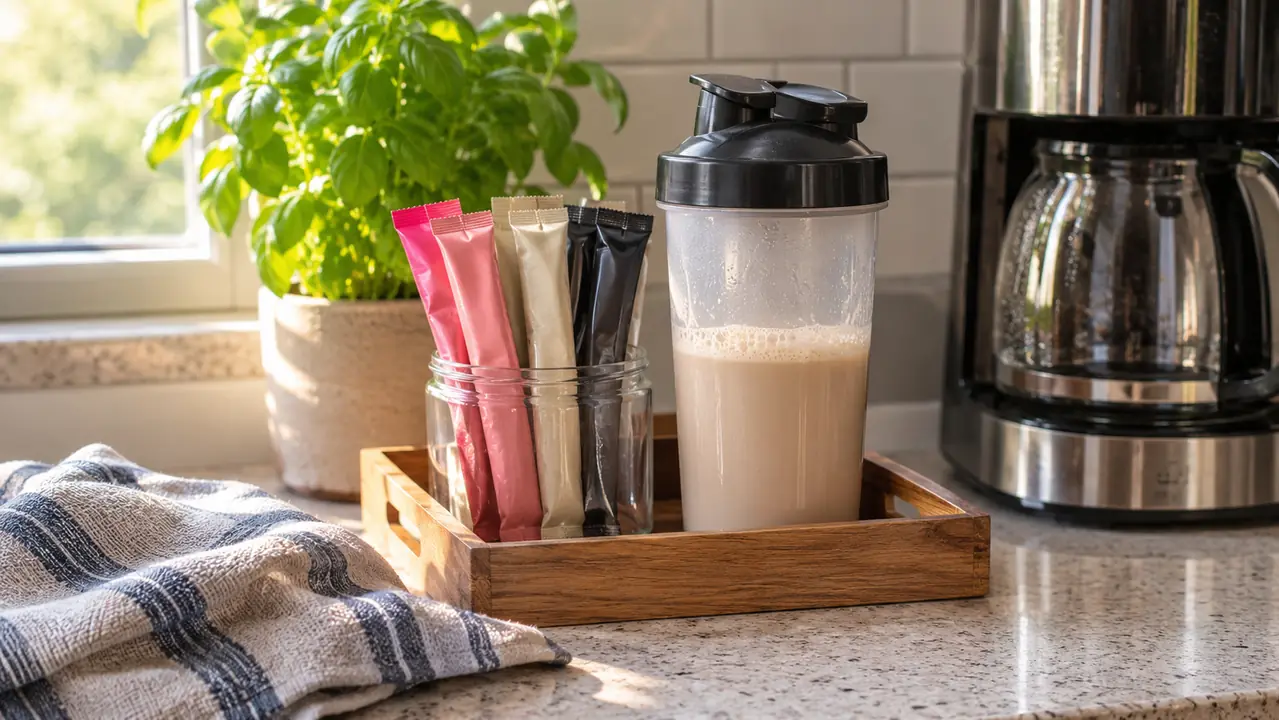
A packet you never open is not hydration. This is where most people lose the habit, not at the buying stage. I mix mine in a shaker bottle on the kitchen counter, one stickpack, water to the fill line, lid on, shake it while I am still standing there. Twenty seconds. Then it goes in the side pocket of the vest and I am out the door.
Taste is the honest test. If it is too strong for you, add water to the bottle next time. If it tastes thin and flat, use a little less. The point is a drink you will finish, not a drink that follows the directions exactly. I have poured out more half-finished bottles of things that tasted like a pharmacy than I care to admit, and every one of them was mixed to the letter.
I tried the scoop-in-a-tub version first and it failed for a boring reason: the tub stayed in the cabinet. A stickpack goes in the pocket. The tub does not. The Ultima packets are the only powder I have kept buying, and not because the flavor beats everything else on the shelf. It is because the format survives contact with a woman who is already late leaving the house.
Two practical notes from a woman who has learned both the hard way. Do not mix it the night before and leave it sitting, because it goes flat and tastes stale by mile one. And on a long, hot morning, carry a second dry stickpack in the other pocket and mix it at the halfway water fountain. Powder travels fine. A pre-mixed bottle in a warm car does not.
Step 4: Time It Instead of Chugging at the End
The chug at the end is the mistake I made for years. You feel fine for two miles, you get home, you drink a quart standing at the sink, and you spend the rest of the morning feeling sloshy and still thirsty. Drinking it all at once does not undo the hours you spent not drinking it. Your body was asking for a little, steadily, the whole time.
What works for me is a rhythm. I sip a few ounces before I leave the driveway, not a lot, just enough that I am not starting dry. On the trail I take small sips about every twenty minutes. That is not a rule anybody handed down from a mountain. It is just a pace I can hold without thinking, and my watch beeps on the hour anyway for other reasons, so I use it.
After the walk I mix one more packet in the first hour home, while I am cooling off on the porch, and I eat something with salt in it. A handful of pretzels does more for me than a second bottle of anything. Then I drink plain water the rest of the day. The electrolyte packet is not the whole plan. It is the part that covers what water alone leaves out.
Step 5: Check Yourself When You Get Home
I have three questions I ask myself on the porch before I go inside. Do I have a headache? Am I still thirsty after a glass of water? And does my urine look pale yellow or does it look like apple juice? Any of those going the wrong way means I under-drunk, and I write it down so I pack better next time.
The writing down part matters more than it sounds. I keep a small tray on the kitchen counter next to the coffee maker, and the packet count in that tray tells me how the week went without my having to remember. If there are still four packets in there on Friday, I did not drink them, and I know exactly why: I rushed out the door and left them in the drawer. Walt has started asking me at the door. It is annoying and it works.
There is also a point where this stops being a hydration question and becomes a call the doctor question. If you get dizzy, confused, stop sweating in real heat, or feel sick to your stomach on a walk, sit down in the shade and get help. Those are not signs that you need a better powder. And if you are regularly getting cramps or headaches no matter what you do, take that to your doctor rather than to a supplement aisle.
What Else Helps
Water before you leave is free and most of us skip it. I keep a glass by the coffee maker and finish it while the coffee brews, which is one of those small habits that costs nothing and does more than the fancy part of the routine. Salty food the night before a long walk helps too. So does walking earlier, before the pavement and the air have had all morning to heat up.
Shade and a loop route do more for a walker than any product. I plan my three miles so there is a water fountain and a bench at the halfway point, and on the hottest weeks I cut the route to two miles rather than muscle through it. A wide hat, a wet bandana around the neck, and a walking partner who will say something if you go quiet and gray, all of that belongs in the plan alongside the packet.
Here is how it fits my actual week. Monday, Wednesday and Friday I lift at the rec center, and I mix a packet in the shaker bottle afterward, standing at the counter with the tray in front of me. Tuesday and Thursday I teach, and one packet rides in the class bag. The Ultima bag sits in that tray next to the coffee maker, which is the only reason I remember any of it at six in the morning.
One more thing, and I say it to my Tuesday class every June: alcohol the night before a long morning walk is a bill that comes due on the trail. So is a big coffee with nothing else in your stomach. I am not your mother and I am not your doctor. I am just a woman who has had to sit down on a porch steps more than once, and I would rather you not have to.
Six electrolytes on the label, zero sugar, one stickpack in a vest pocket. That is the whole of the shopping decision. The rest of it is just paying attention.
The Packet That Lives in the Vest Pocket
Twenty stickpacks, four of each flavor, mixed in a shaker bottle in about twenty seconds. If your walk is longer than your water bottle, this is the piece of the routine worth getting right before summer.
Amazon Check Today's Price on Amazon →